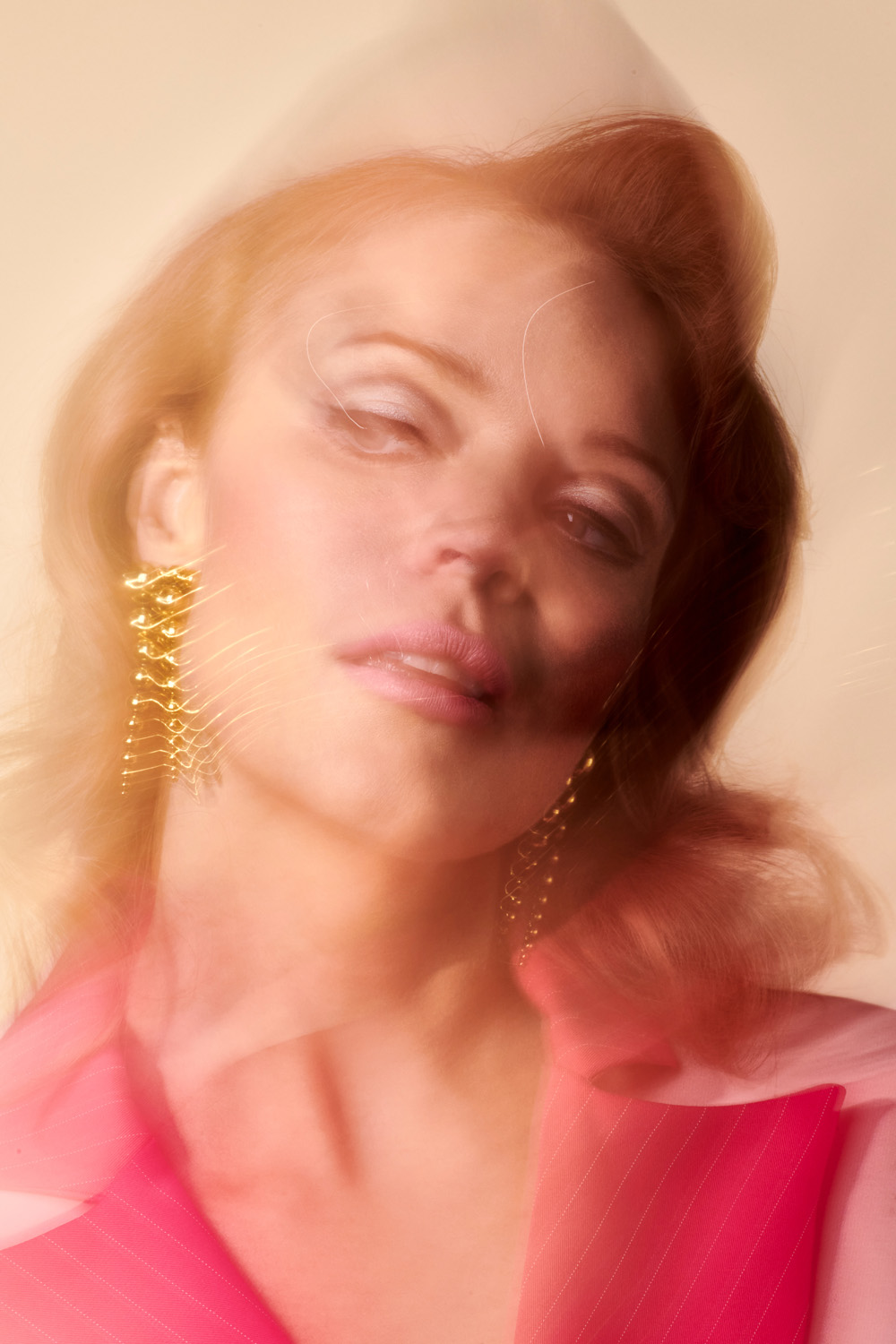
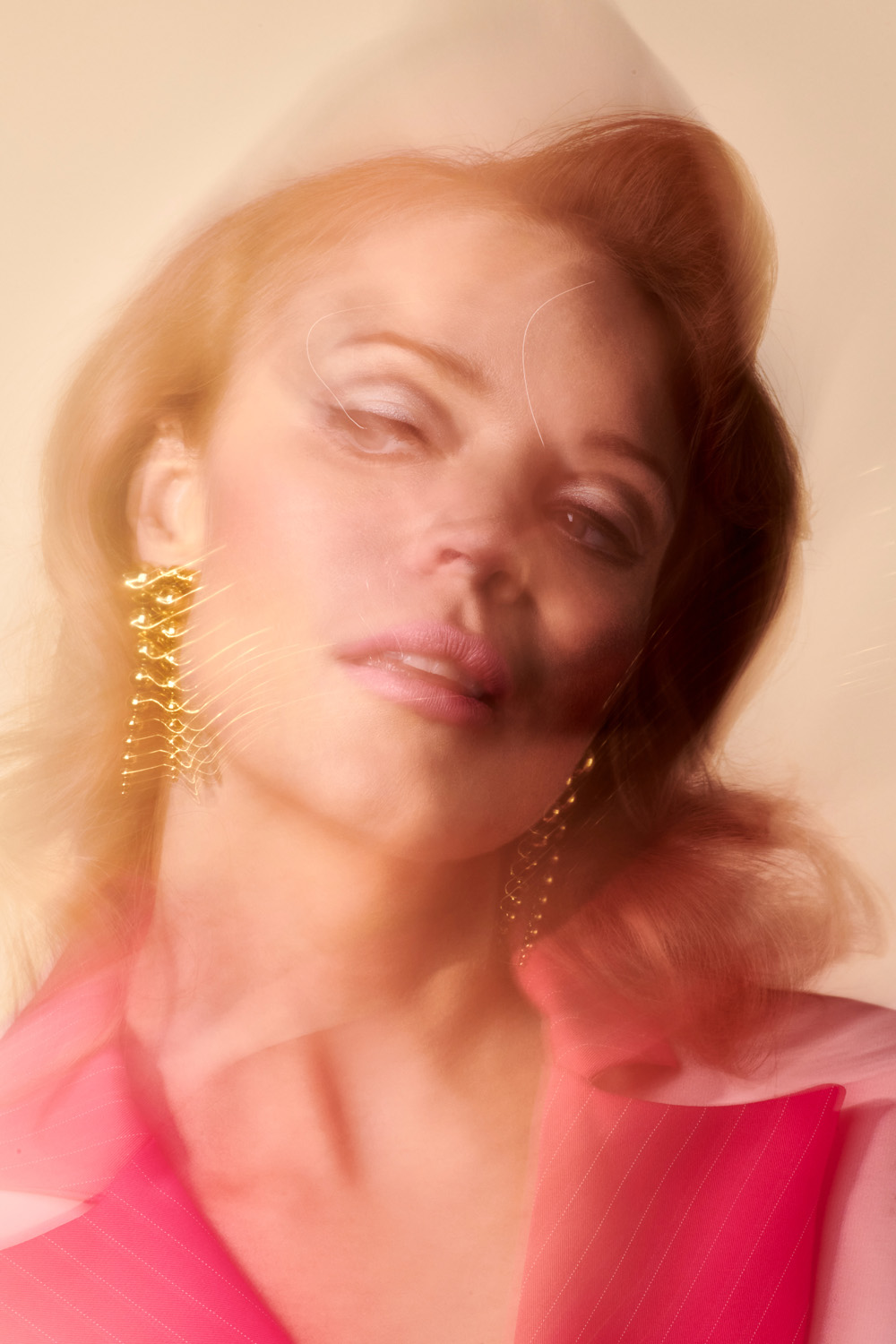
Photos: Jena Cumbo
Styling: Anica Buckson
Hair: Wesley O’Meara
Makeup: Hiro Yonemoto
Some artists find their sound. Courtney Elle plays her way into it. The Wilmington-born singer and performer — a theatre kid turned Cotton Club dreamer — makes music that refuses to sit still: funk and nostalgia and pop instinct all colliding in something that sounds both like 1943 and right now. Her debut single “Juke,” born from a session full of dancing around like a fool and a rubber chicken adlib that broke both her and producer D. Lawrence into hysterical laughter, is exactly the kind of accidental magic she’s always chasing. Warm, weird, fully realized, and deeply hers.
Elle spent years moving through pop groups, cover bands, and performing arts stages before a Backstage casting call connected her with producer Darrell Lawrence — and something clicked. Their debut collaboration is funk-forward and Cotton Club-glamorous, a dive bar that remembers it used to be The Savoy. Below, she talks about play as a philosophy, dressing as armor, and making music that teleports you somewhere you can almost smell.
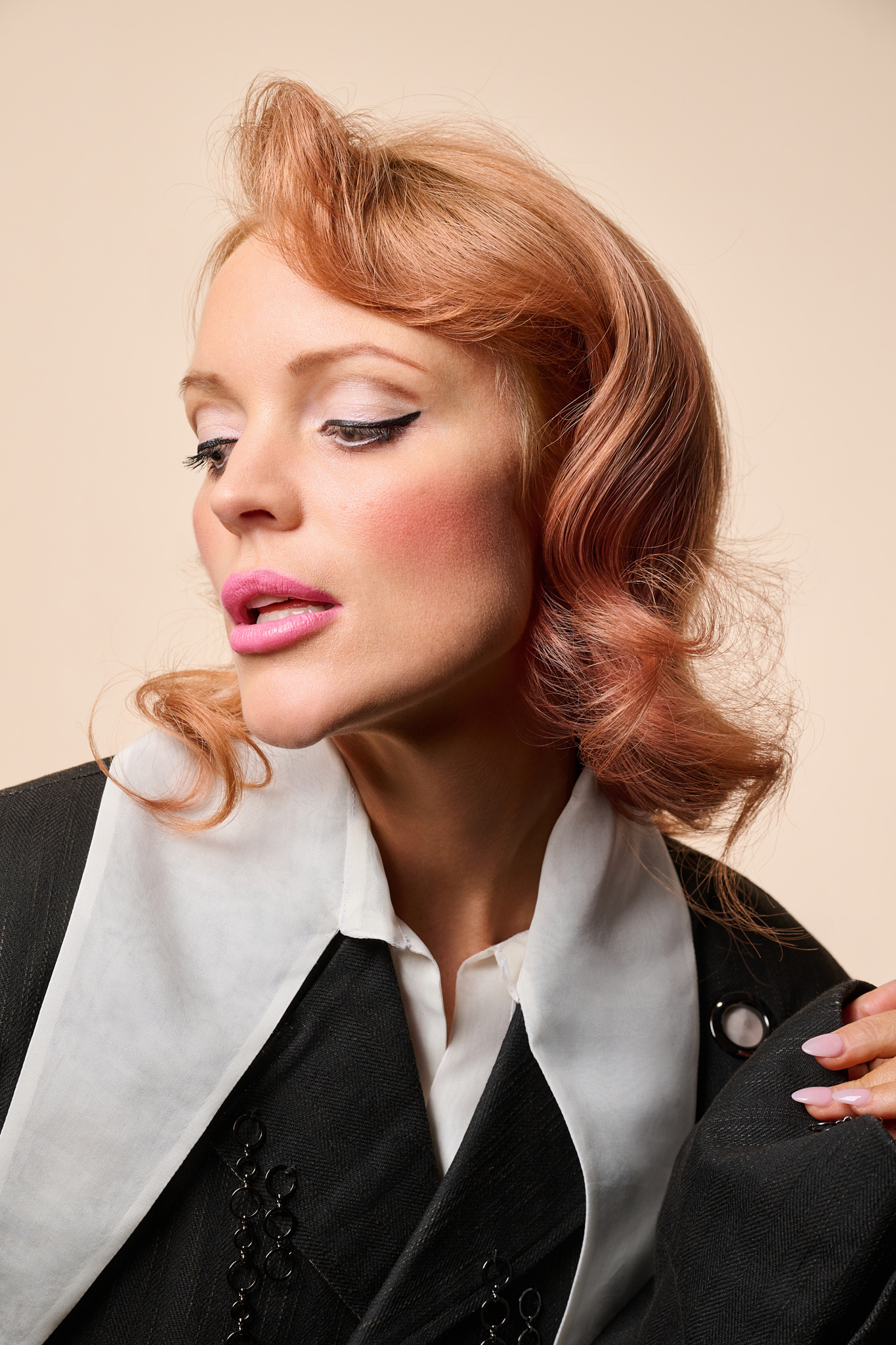
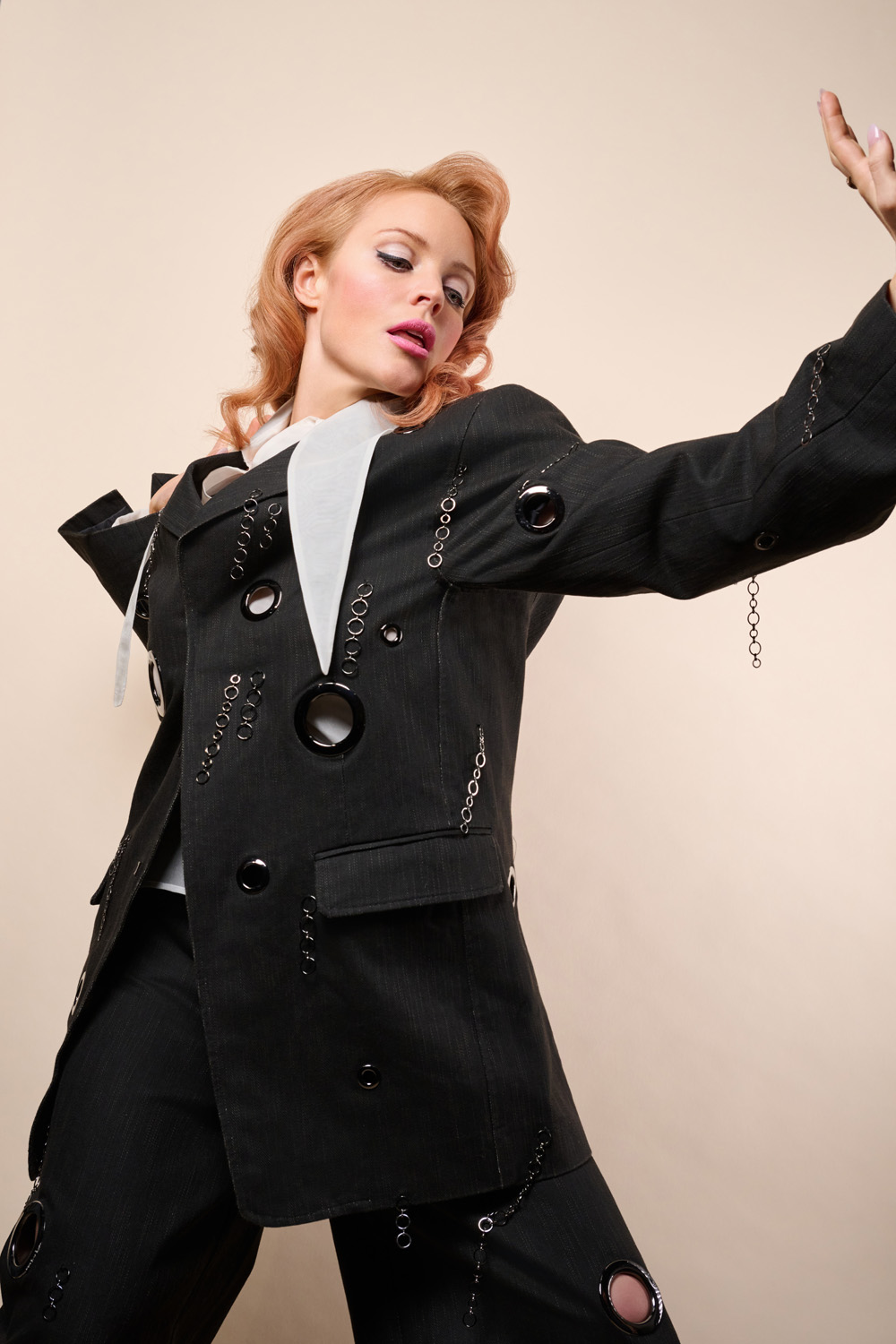
Suit: Clara Son @clarasonstudio Shirt: Sanyam Sharma @The.sanyamsharma Shoes: JW Pei @jwpei_official
I grew up soaking in a little bit of everything — pop across every era, some country, some R&B, some rock — so my influences were always kind of all over the place in the best way. The funk element people hear now? That came through my producer D. Lawrence. He brought this deep love and knowledge of funk into our sessions that has really challenged me in such a fun way. But I think the real “click” moment isn’t one memory but rather a feeling. When I’m having fun creating, the outcome always feels like me. When I can literally hear myself smiling in the music? That’s when I know it’s authentically me. That’s the thing I’m always chasing.
In short, I don’t overthink it. I step out of my head and just play — and I mean that literally. I think as adults we lose sight of how powerful play actually is. At some point the world tells you to be serious, to be one thing, to fit a lane. But that never really took with me. Growing up as a theatre kid, attending a performing arts school, learning early on that there’s joy in tapping into all these different facets of yourself — that was never performance for its own sake, it was exploration. So when I’m in the studio and something from Harlem in 1943 shows up next to Parliament-Funkadelic, I’m not thinking about how I got there. I’m just following what feels fun and fulfilling, and worrying a lot less about how it lands externally. I think that’s actually what keeps me honest.
The most memorable, most authentic stuff always comes from clowning around. Hands down. I’ll never forget the moment that specific line came together. Darrell had already written most of the lyrics and I was in the studio trying to recall them as I was vibing to the music and they just weren’t coming to me. So I just kept going. Dancing around like a complete fool, adlibbing, filling the gaps with whatever fell out of my mouth. And that line landed and we both just lost it — completely broke into hysterical laughter. It was such a lighthearted, unguarded moment. And it stuck. Because that’s exactly what the song is about: having fun, giving yourself permission to lose yourself in the music. I think the magic tends to sneak in when you stop trying to catch it.
That one was really D. Lawrence’s brainchild. He brought the music in and I just thought it was so funky, so cool, and yet it had this timeless quality that felt like it was reaching back across decades. I actually attended the Cab Calloway School of the Arts in Wilmington growing up, so that whole 1930s jazz era wasn’t just a reference for me — it was part of my formation. I was immersed in that world during some of my most impressionable years. So when I heard “Juke” for the first time, something in me just recognized it. Darrell and I both felt this interplay between something so modern and funky and yet so deeply rooted in that Cab Calloway era. It just made us want to do a full, loving ode to that decade. The sequins, the tap dancing, the sophistication. It felt less like a creative decision and more like the song told us what it wanted to be.
Very early. Almost at conception, really. The music and the visuals are born together for me. We’ll be mid-session and already talking about imagery, color, mood. As for references, I’m genuinely inspired by all eras — anything that carries a sense of culture, luxury, sophistication, fashion. The feeling of a world that was fully realized and intentional. A lot of that comes from travel. My parents encouraged it from a really young age and I’ve been fortunate enough to see a lot of the world. You can’t move through different cultures, different aesthetics, different histories without it seeping into how you see things. I’ll be somewhere in Europe, Asia, South America and just feel something shift creatively. A color, a beautiful archway, a market — it all goes in and comes back out in the work somehow. For me the visual and the sonic are really just two languages saying the same thing.
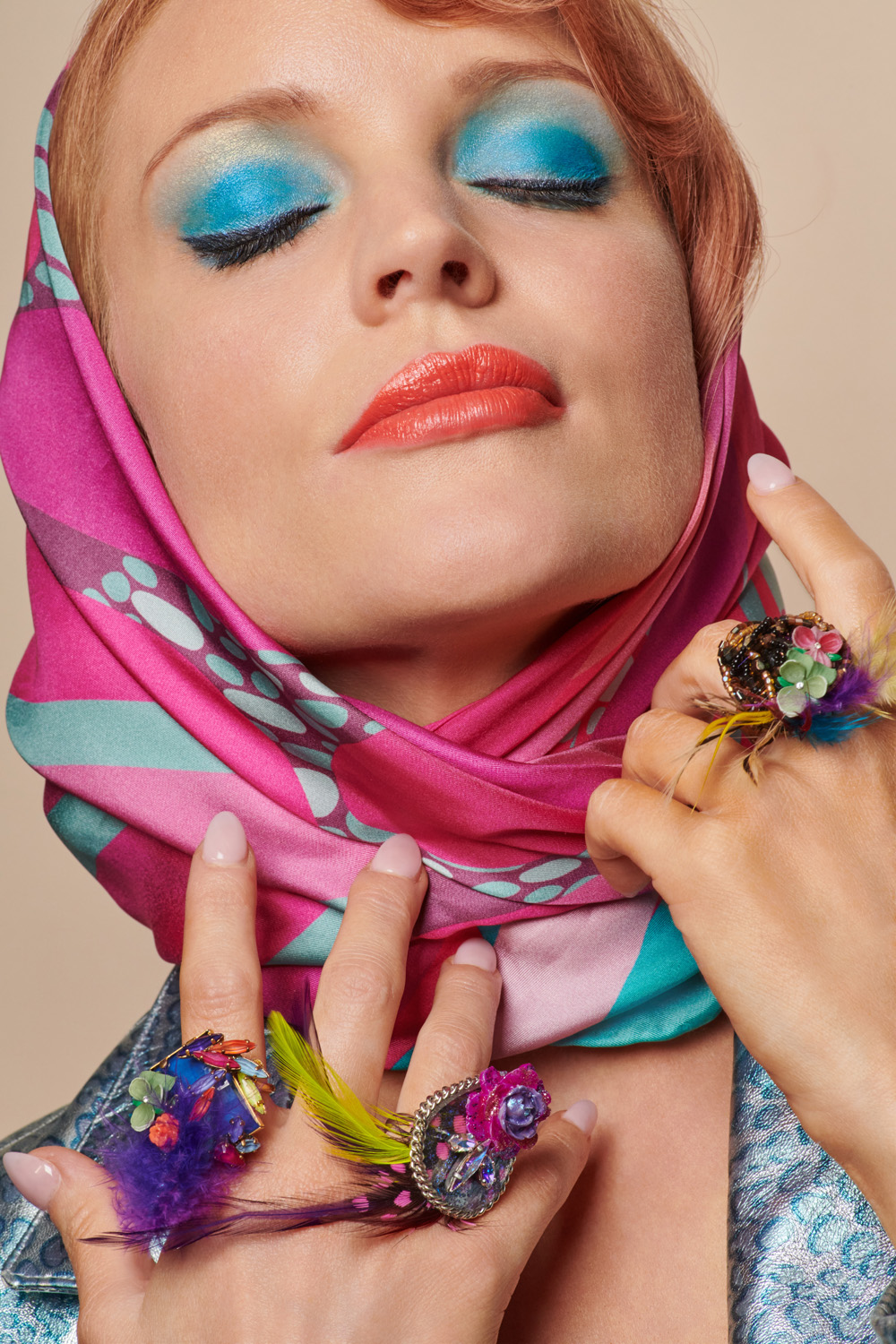
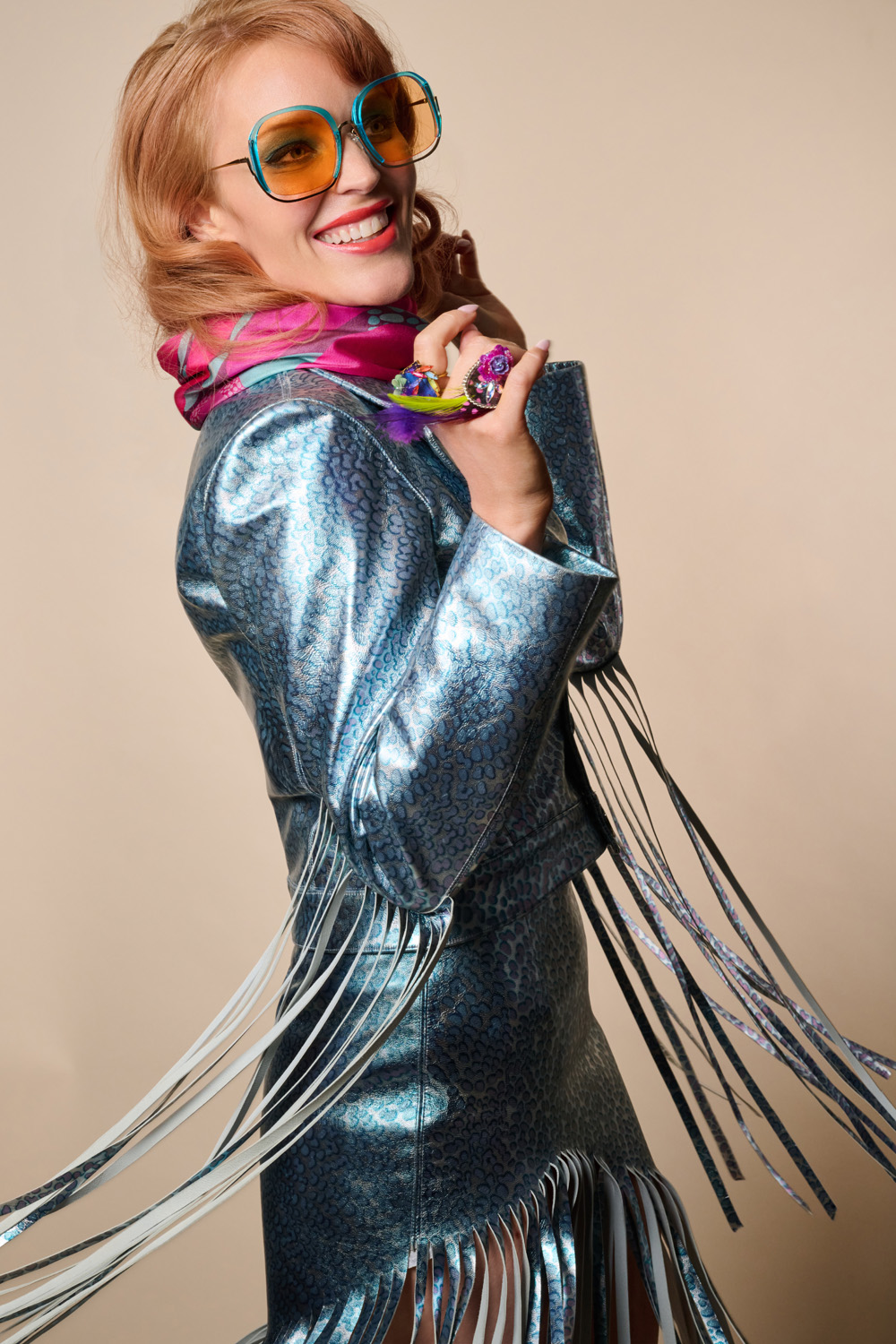
Jacket + Skirt: Sedlackova @denisa.sedlackova_ Scarf: Poemet @poemet.co Eyewear: Haute Life world @hautelifeworld Earrings and bracelet & Rings: Erickson Beamon @ericksonbeamon
Fashion has always been one of my favorite forms of expression and for me it’s deeply tied to feeling. How you dress has such a real impact on how you carry yourself, how you move, how you feel from the inside out. So I like to dress for the feeling I want to inhabit rather than any particular trend or expectation. The feeling I’m almost always wanting to embody is feminine and empowered. The bows, the ruffles, the lace, the jewelry, the colors, the shoes — I love all of it. There’s nothing frivolous about it to me. It’s armor. It’s intention. It’s character work. If I could pick an era? The glamour of the 1930s and 40s with the freedom of right now. The fabrics, the silhouettes, the gloves, the drama of getting dressed as a full event — but on my own terms. I think that tension is actually what makes our visuals interesting. It’s not nostalgia, it’s a conversation.
She’s still playing. Still following the feeling rather than the formula. Still making art that feels completely authentic and refuses to be just one thing. But I think she’s more connected — to her audience, to the live experience, to the conversation that happens when the music leaves the studio and finds the people it was made for. That’s the thing I’m most hungry for right now. To close that distance. To feel the music land in real time. As for what she’s making — honestly I hope it still surprises me. I never want to arrive somewhere and just stay there. The expansion has always been the point. But what I want people to feel? That part I’m clear on. I want the music to be a light. I want it to be the thing that meets people wherever they are and makes them feel seen. At the end of the day I just want to make everybody feel like somebody.
The post COURTNEY ELLE WANTS TO MAKE EVERYBODY FEEL LIKE SOMEBODY appeared first on LADYGUNN.

Leave a Reply